Introduction: The Quest for Beauty』s Blueprint
Beauty, though often perceived as subjective, has a hidden structure—a mathematical undercurrent that has fascinated artists, architects, and scientists for centuries. In the realm of medical aesthetics, this structure manifests as proportion and harmony, the twin pillars that guide every procedure, from facial fillers to rhinoplasty. But are these principles merely rigid formulas, or do they hold a deeper, more flexible truth? As we embark on this exploration, we』ll uncover how the golden ratio, facial proportions like the three courts and five eyes, and the psychology of visual balance shape our perception of beauty. More importantly, we』ll challenge the notion that beauty can be reduced to a checklist, revealing how true artistry lies in knowing when to follow the rules—and when to break them.
Rising Action: The Foundations of Proportion in Aesthetics
At the heart of aesthetic design lies the concept of proportion, a principle so ancient it dates back to the Greeks. The golden ratio, approximately 1.618, is often cited as the mathematical ideal of beauty. Found in nature—from the spiral of a seashell to the arrangement of leaves on a stem—this ratio has been applied to human faces as a benchmark for harmony. A face adhering to this ratio might have a width-to-height relationship of 1:1.618 or eyes spaced at a distance that mirrors this divine proportion.

In medical aesthetics, this concept is often translated into practical frameworks like the 「three courts and five eyes」 rule, a traditional Chinese principle adapted globally. The face is divided vertically into three equal sections—forehead, midface, and lower face—and horizontally into five equal eye-widths. A balanced face, according to this rule, should have symmetry and proportionality across these divisions. For instance, a chin that is too short disrupts the lower court, creating a sense of imbalance, while overly wide-set eyes can throw off the five-eye harmony.
But proportion isn』t just about static measurements. It』s about how these ratios interact with light, shadow, and movement. Consider the cheekbones: a high, well-defined cheekbone reflects light in a way that enhances the midface, creating a visual lift. A skilled aesthetician doesn』t just measure; they visualize how these proportions will appear in different lighting or from various angles. This dynamic understanding sets the foundation for any successful intervention, whether it』s a subtle tweak with Botox or a transformative surgical procedure.
Climax: The Psychology Behind Visual Harmony
While numbers and ratios provide a roadmap, the true power of proportion lies in its psychological impact. Humans are hardwired to find balance and symmetry attractive because they signal health and genetic fitness. Studies, such as those published in the Journal of Experimental Psychology, have shown that symmetrical faces are rated as more attractive across cultures, likely because asymmetry can indicate developmental stress or illness.

Yet, perfect symmetry isn』t always the goal. Slight deviations—think of a beauty mark or a slightly crooked smile—can add character and memorability. This is where the concept of dynamic balance comes into play. Unlike static symmetry, dynamic balance considers how elements of the face work together to create a cohesive whole, even if they aren』t perfectly mirrored. For example, a slightly larger left eye might be balanced by a fuller right lip, creating a face that feels harmonious without being a mirror image.
In medical aesthetics, understanding this psychology is crucial. A practitioner might use fillers to enhance one side of the face more than the other, not to achieve perfect symmetry, but to create a balanced perception. This approach taps into the viewer』s subconscious, guiding their gaze to focal points like the eyes or lips. It』s no accident that many iconic faces—think of Marilyn Monroe or David Bowie—defy strict symmetry yet captivate with their unique harmony. The lesson here is clear: beauty isn』t a formula; it』s a feeling, orchestrated by the interplay of proportion and individuality.
Falling Action: Breaking the Rules with Creative Intent
If proportion and harmony are the rules, then creativity is the art of breaking them. Some of the most striking faces in history have defied conventional standards, yet they remain etched in our collective memory. Consider Frida Kahlo, whose unibrow and bold features challenged traditional ideals, or Cindy Crawford, whose mole became a signature rather than a flaw. These examples remind us that beauty isn』t about perfection—it』s about resonance.
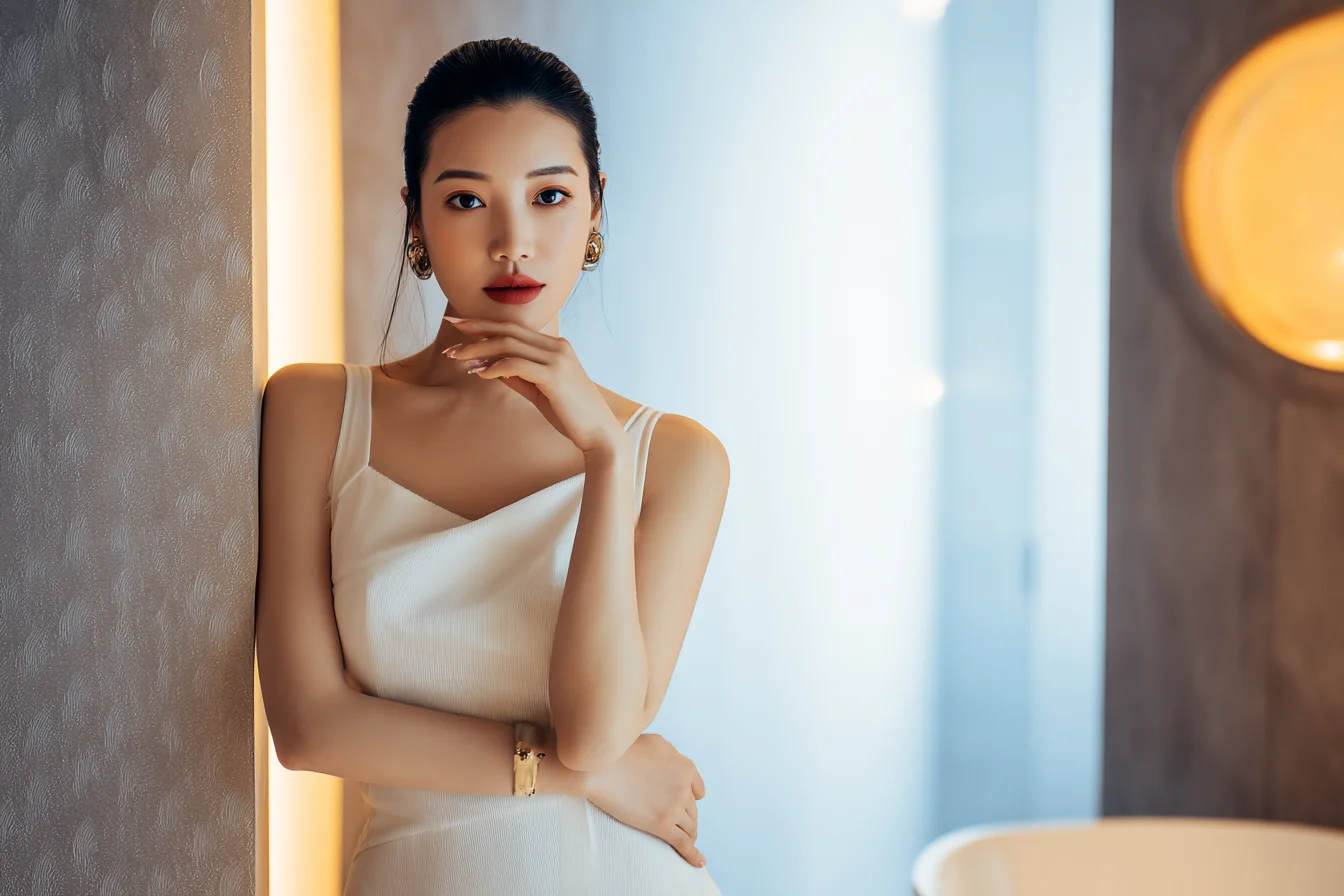
In medical aesthetics, this principle translates to personalized design. A cookie-cutter approach, where every patient is sculpted to fit the golden ratio, often results in unnatural or overly 「done」 appearances. Instead, the best practitioners use proportion as a starting point, then tailor their interventions to the individual』s unique features and personality. For instance, a patient with a naturally angular face might benefit from softening certain lines rather than forcing a rounder, 「ideal」 shape. Similarly, cultural and personal preferences play a role—beauty standards in East Asia often emphasize a V-shaped jawline, while Western ideals might prioritize high cheekbones.
Breaking the rules also means embracing imperfection as a strength. A skilled aesthetician might deliberately leave a small asymmetry in a lip enhancement to preserve authenticity, or they might accentuate a unique feature rather than minimizing it. This approach requires not just technical skill but also an intuitive understanding of visual storytelling. After all, a face isn』t just a collection of measurements—it』s a canvas that communicates emotion, history, and identity.
Resolution: The Art and Science of Harmony
As we』ve journeyed through the mathematics of beauty, from the golden ratio to the psychology of perception, one truth emerges: proportion and harmony are not rigid laws but living principles. They provide a framework, a set of tools that medical aestheticians can use to enhance natural beauty. Yet, the true magic happens when these tools are wielded with creativity and empathy, transforming a face into a work of art that feels both harmonious and uniquely personal.

For practitioners, this means balancing science with intuition. It means studying the face not just as a set of measurements but as a dynamic entity that interacts with light, expression, and emotion. It means listening to the patient』s vision and understanding their story, then using proportion as a guide to bring that vision to life. And for patients, it means trusting in the process—knowing that beauty isn』t about conforming to an ideal but about amplifying what makes you, you.
In the end, the mathematics of beauty is less about numbers and more about connection. It』s about creating faces that resonate, that draw the eye and stir the heart. Whether through a subtle tweak or a bold transformation, the goal remains the same: to craft harmony that feels effortless, even when it defies the rules. So the next time you look in the mirror, remember—your beauty isn』t just in your proportions. It』s in the story they tell, and the way they make the world see you.