In the world of medical aesthetics, beauty isn』t just skin deep—it』s a complex interplay of science, art, and perception. As practitioners, designers, or even enthusiasts, we often rely on instinct when assessing what looks 「right」 or 「beautiful.」 But here』s the hard truth: gut feelings alone won』t cut it if you want to create transformative, harmonious results. True aesthetic judgment is a skill—a muscle that can be trained through deliberate practice, systematic analysis, and a willingness to transcend personal bias. Inspired by the principles of deliberate practice and systems thinking, this article will walk you through a structured approach to cultivating high-level aesthetic judgment, helping you make balanced, mature decisions in med-aesthetic design. By the end, you』ll have a clear framework to evaluate beauty objectively, apply universal principles, and navigate the delicate tension between innovation and harmony.
Let』s dive into a process that moves from raw intuition to refined rationality, using a convergent thinking model to focus on actionable steps and measurable outcomes.
Why Aesthetic Judgment Matters in Medical Aesthetics
Before we break down the 「how,」 let』s address the 「why.」 In medical aesthetics, poor judgment can lead to results that feel off—whether it』s an overfilled lip that throws off facial proportions or a design choice that prioritizes trends over timeless balance. These missteps often stem from a reliance on subjective taste or a failure to see the bigger picture. Aesthetic judgment isn』t just about creating something pleasing to your eye; it』s about crafting outcomes that resonate universally, respect anatomical integrity, and enhance a client』s natural harmony.
High-level judgment allows you to:
- Avoid Common Pitfalls: Overemphasis on a single feature (e.g., exaggerated cheekbones) at the expense of overall balance.
-
Build Client Trust: Deliver results that align with both their vision and objective beauty standards.
-
Innovate Responsibly: Push boundaries without sacrificing harmony or function.

The goal here isn』t to suppress your creative instincts but to layer them with a systematic approach that ensures consistency and excellence. Think of this as the difference between a novice cook following a recipe and a chef who understands flavor profiles so deeply they can improvise with precision.
Step 1: Deconstruct Your Intuition—What Are You Really Seeing?
The first step in training your aesthetic judgment is to unpack your initial reactions. Intuition is a powerful starting point, but it』s often clouded by personal biases, cultural conditioning, or fleeting trends. To move beyond this, adopt a habit of deconstruction—breaking down your gut response into specific observations.
Actionable Practice: Next time you evaluate a face, design, or result (whether it』s a client』s before-and-after or a celebrity photo), ask yourself:
- What specific elements am I drawn to? Is it the symmetry of the jawline, the proportion of the eyes, or the texture of the skin?
-
What feels 「off」 to me, and why? Can I pinpoint it to a measurable imbalance (e.g., an overly narrow nasal bridge relative to the face width)?
-
Am I influenced by external factors? For instance, is my preference shaped by a trending look on social media (like ultra-defined brows) rather than objective harmony?
By dissecting your intuition, you start to see patterns in your perception. This is the foundation of moving from 「I like it」 to 「I understand why it works.」 As a med-aesthetic professional, this skill helps you communicate more effectively with clients, justifying your recommendations with clarity rather than vague feelings.
Case Study: Consider the trend of over-volumized lips in the early 2010s. Many practitioners chased this look without considering facial proportions, leading to unnatural results. A trained eye would have noticed the imbalance—lips overpowering the lower face—and adjusted the approach to prioritize overall harmony over trend compliance.
Step 2: Learn Universal Aesthetic Principles—The Rules That Underpin Beauty
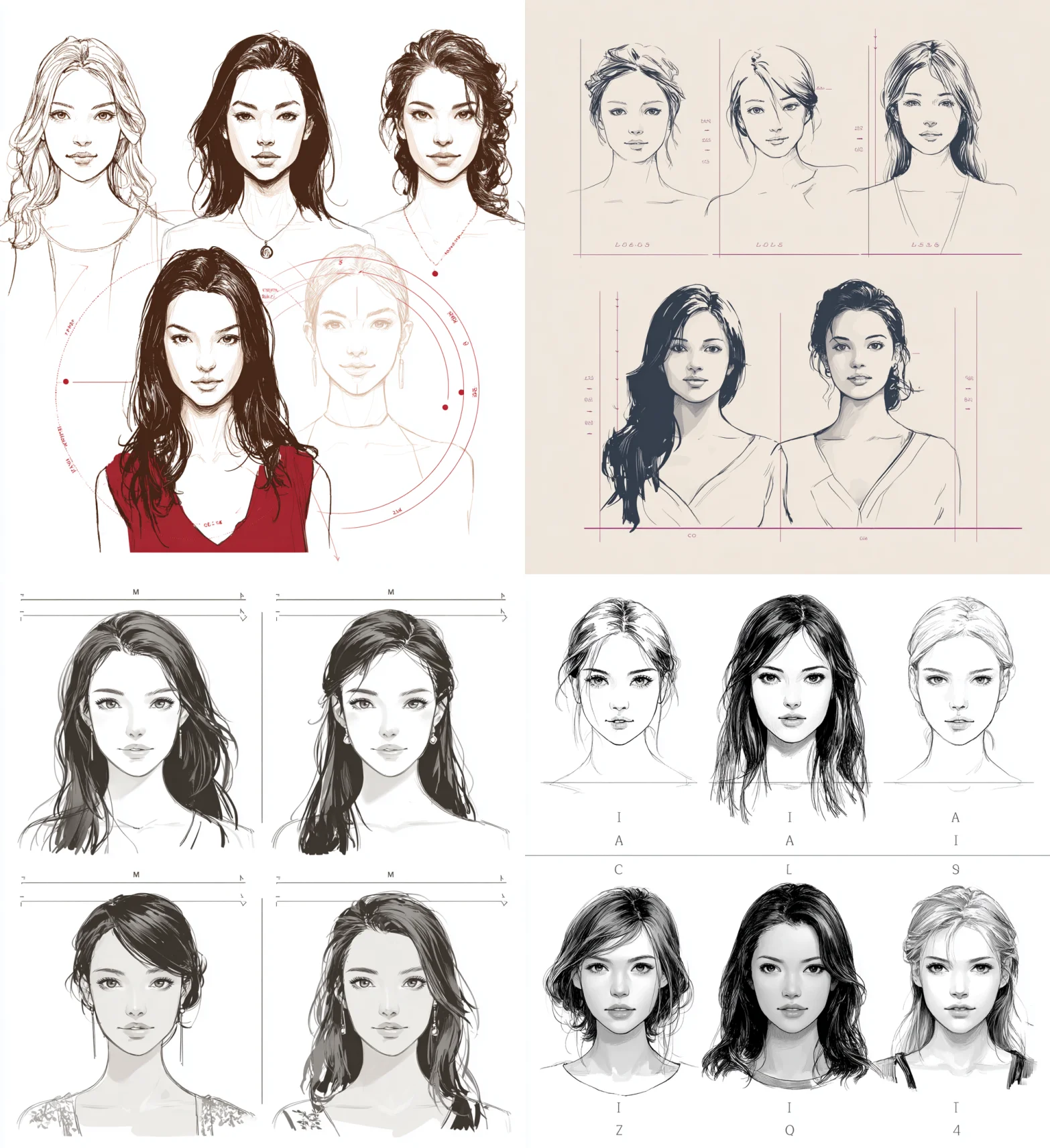
Once you』ve deconstructed your intuition, the next step is to anchor your judgment in universal aesthetic principles. These are time-tested concepts that transcend personal taste and cultural shifts, providing a reliable framework for evaluation. In medical aesthetics, these principles often revolve around proportion, symmetry, and harmony, rooted in both art history and evolutionary biology.
Key Principles to Study:
- The Golden Ratio (Phi, 1.618): This mathematical ratio appears in nature and art as a marker of ideal proportions. In facial aesthetics, it guides the relationship between features—e.g., the width of the eyes relative to the distance between them or the length of the nose relative to the face. Tools like calipers or digital imaging software can help you measure and apply this ratio in practice.
-
Symmetry and Balance: While perfect symmetry isn』t always the goal (slight asymmetry can add character), significant deviations often disrupt perceived beauty. Train your eye to spot imbalances in facial halves or between upper and lower facial thirds.
-
Harmony of Features: No single feature should dominate. For instance, overly prominent cheek fillers can make the eyes appear smaller, disrupting the visual flow of the face.
-
Cultural and Anatomical Context: Universal principles must be adapted to individual anatomy and cultural ideals. A high nasal bridge may be prized in Western aesthetics but less desirable in East Asian contexts, where softer features often reign.
Actionable Practice: Spend 30 minutes a week studying classical art, architecture, or even natural forms (like seashells or flowers) to internalize these principles. Then, apply them to real-world cases. Use before-and-after photos to analyze how adjustments align with or deviate from these standards. Apps like FaceTune or professional imaging software can simulate changes and help you visualize proportional shifts.
By grounding your judgment in these principles, you create a benchmark for beauty that isn』t swayed by passing fads or subjective whims. This is where you start to see beauty as a system, not just a feeling.
Step 3: Develop Rational Analysis—Build a Checklist for Objective Evaluation
With principles in hand, the next step is to systematize your evaluation process. Convergent thinking—focusing on a single, optimal solution—requires a structured approach. In medical aesthetics, this means creating a mental or physical checklist to assess a design or outcome objectively.

Sample Aesthetic Evaluation Checklist:
- Proportions: Do the facial thirds (forehead, midface, lower face) align roughly with the 1:1:1 ratio? Are individual features proportionate to the whole?
-
Symmetry: Are there noticeable asymmetries that disrupt balance? If so, are they intentional or correctable?
-
Harmony: Do the features work together as a cohesive unit, or does one element overpower the others?
-
Functionality: Does the design respect anatomical function? For example, over-tightened skin from a facelift shouldn』t impair natural expressions.
-
Client Context: Does the result align with the client』s goals, bone structure, and lifestyle? A bold look might suit a performer but feel out of place for a corporate professional.
-
Longevity: Will this design age well, or is it tied to a fleeting trend that might look dated in a few years?
Actionable Practice: Apply this checklist to at least three cases or designs weekly. Document your findings in a journal or digital tool, noting where your initial intuition aligned or clashed with the rational analysis. Over time, this repetition will sharpen your ability to spot issues quickly and propose solutions with confidence.
This step is where you start to balance creativity with discipline. It』s not about stifling innovation but ensuring that your bold ideas are grounded in a framework that prevents chaos. Think of it as a safety net—your checklist keeps you from falling into the trap of 「I thought it looked good at the time.」
Step 4: Navigate the Tension Between Innovation and Harmony
One of the biggest challenges in medical aesthetics is balancing the desire to innovate with the need for harmony. Clients often come with requests for dramatic changes—think extreme contouring or oversized features—that can clash with universal principles. As a practitioner with trained judgment, your role is to guide them toward outcomes that push boundaries without breaking balance.
Strategies for Balance:
- Educate Clients: Use visual tools (like 3D imaging) to show how a requested change might disrupt proportions. Offer alternatives that achieve a similar vibe with better harmony.

- Incremental Innovation: Instead of a drastic overhaul, introduce subtle, innovative tweaks that build on natural features. For instance, a slight enhancement of the cupid』s bow can modernize a lip design without overwhelming the face.
-
Test and Reflect: If you』re experimenting with a new technique or trend, apply it conservatively first. Post-procedure, analyze the result against your checklist to see if it holds up to scrutiny.
Case Study: A client requests a 「Kardashian-inspired」 jawline with sharp, dramatic angles. While the look is trendy, your analysis shows it would overpower her delicate midface. Using imaging software, you demonstrate how a softer contour still achieves a defined look while maintaining balance. The client agrees, and the result feels both modern and timeless.
This step is about mastering the art of saying 「no」 without losing trust. It』s also about recognizing that true innovation often lies in restraint—knowing when to stop before crossing into excess.
Step 5: Commit to Continuous Feedback and Iteration
Aesthetic judgment isn』t a one-and-done skill. Like any craft, it requires constant refinement through feedback and iteration. The best practitioners are relentless learners, always seeking input and analyzing outcomes to improve.
How to Build a Feedback Loop:
- Self-Reflection: After every procedure or design, revisit your checklist. Did the result match your prediction? If not, why?
-
Peer Review: Share cases with colleagues or mentors for unbiased critique. Join online forums or local med-aesthetic groups to exchange insights.
-
Client Feedback: Ask clients for honest input on their results. Did the outcome meet their expectations? How do they feel about the balance and naturalness?
-
Study Trends Critically: Keep up with industry trends, but evaluate them through your rational lens. Not every popular technique (e.g., thread lifts or extreme fillers) aligns with long-term harmony.
Actionable Practice: Set a monthly 「review day」 to analyze your work. Pick three cases, run them through your checklist, and identify one area for improvement. Over time, this habit will compound, turning small adjustments into significant growth.
The Payoff: Mastery in Medical Aesthetic Design
Training your aesthetic judgment is a journey from reactive intuition to proactive mastery. By deconstructing your instincts, grounding yourself in universal principles, systematizing your analysis, balancing innovation with harmony, and committing to feedback, you build a skill set that elevates your work in medical aesthetics. This isn』t just about creating pretty faces—it』s about crafting results that resonate on a deeper level, blending science, art, and empathy.
The next time you』re faced with a design decision, remember: beauty isn』t a mystery to be stumbled upon. It』s a puzzle to be solved with clarity and precision. Start small—pick one principle or checklist item to focus on this week—and watch how quickly your judgment sharpens. As with any high-performance skill, the key is deliberate practice. So, get to work. Your clients, your craft, and your confidence will thank you.
Final Note: If you』re looking for a deeper dive into specific tools or case studies, drop a comment or reach out. I』m always experimenting with new frameworks and happy to share what』s working. Let』s keep this conversation going—how are you training your aesthetic eye?