The Scene: A Universal Glance of Attraction
Picture this: you’re scrolling through a social media feed, and a face stops you dead in your tracks. You don』t know this person, yet something about their features—perhaps the symmetry of their eyes, the curve of their jawline, or the glow of their skin—draws you in. You』re not alone. Across cultures, ages, and backgrounds, certain facial traits seem to universally captivate us. But why? What invisible forces shape our perception of beauty, making us pause and stare at one face while barely noticing another?
This isn』t just a fleeting curiosity. In the world of medical aesthetics, understanding what makes a face 「attractive」 is the foundation of designing treatments that resonate with clients on a visceral level. As practitioners and enthusiasts, we』re not just sculpting skin and bone; we』re navigating a complex web of biology, psychology, and culture. So let』s dive into the heart of aesthetic psychology to uncover why certain facial features are deemed universally appealing—and how we can use this knowledge to create beauty that feels both timeless and deeply personal.
The Complexity: A Three-Layered Puzzle of Attraction
Attraction isn』t a simple switch in our brains that flips on or off. It』s a layered interplay of hardwired instincts, evolutionary imperatives, and cultural conditioning. To truly grasp why we』re drawn to specific facial features, we need to dissect this puzzle into three core components: the biological basis of visual perception, the evolutionary psychology of mate selection, and the social-cultural filters that shape our ideals.
1. The Biological Lens: Symmetry, Proportions, and Visual Processing
At the most fundamental level, our brains are wired to process visual information in ways that prioritize order and balance. Symmetry, for instance, is often cited as a hallmark of facial attractiveness. Studies, such as those published in the journal Nature (1994), have shown that symmetrical faces are perceived as more attractive across diverse populations. Why? Because symmetry signals health and genetic stability. Our visual cortex, honed by millions of years of evolution, is exceptionally adept at detecting deviations from balance. A face with aligned eyes, evenly spaced features, and proportional dimensions triggers a subconscious sense of 「rightness.」

But it』s not just symmetry. Proportions play an equally critical role. The 「golden ratio」—a mathematical principle often linked to aesthetic harmony—appears in nature and art, and yes, in faces we find beautiful. Research by Dr. Stephen Marquardt, a pioneer in facial aesthetics, suggests that faces adhering to specific proportional ratios (like the width of the eyes relative to the face or the distance between the nose and mouth) are universally preferred. These proportions aren』t arbitrary; they align with how our brains process visual stimuli, favoring patterns that are easy to decode and categorize as 「pleasing.」
Even skin texture and tone tap into this biological wiring. Clear, smooth skin with an even complexion signals youth and vitality—traits our brains are programmed to associate with health. This isn』t vanity; it』s a survival mechanism encoded in our neural pathways. When designing aesthetic treatments, understanding these innate preferences allows practitioners to enhance features in ways that feel instinctively 「correct」 to the human eye.
2. The Evolutionary Perspective: Beauty as a Signal of Fitness
Zoom out from biology to the broader scope of evolution, and the story of attraction becomes even more compelling. Evolutionary psychology posits that our aesthetic preferences are rooted in the drive to survive and reproduce. Faces that we find attractive often signal traits that would have been advantageous to our ancestors in mate selection.
Take facial symmetry again. Beyond mere visual appeal, symmetry is a proxy for genetic health. Asymmetries can result from developmental stressors, poor nutrition, or genetic mutations—none of which bode well for reproductive success. A 2011 study in Evolution and Human Behavior found that symmetrical faces are not only rated as more attractive but also perceived as more fertile and capable of producing healthy offspring. Similarly, features like high cheekbones in women or a strong jawline in men are often linked to hormonal health (estrogen and testosterone levels, respectively), which are indicators of reproductive fitness.
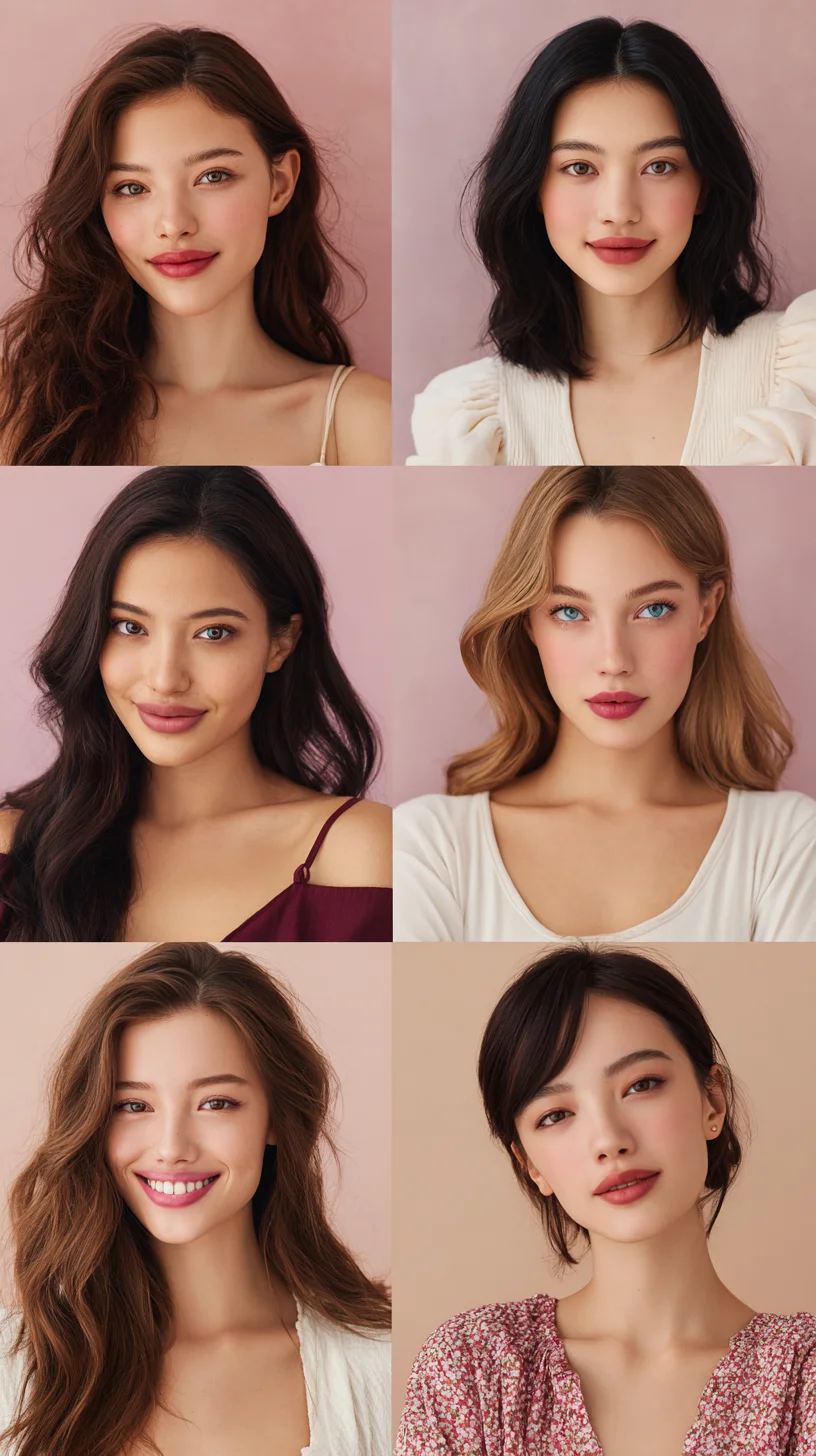
Youthful features also play a starring role here. Large eyes, full lips, and a small nose—often described as 「neotenous」 traits—mimic the facial characteristics of infants, triggering a nurturing response in others. Evolutionary biologist Konrad Lorenz dubbed this the 「baby schema,」 arguing that such features elicit caregiving instincts, making individuals with these traits more likely to be protected and supported by their communities. In med-aesthetics, this explains the popularity of treatments like lip fillers or under-eye rejuvenation, which restore or enhance these youthful cues.
But evolution isn』t a monolith. While certain traits like symmetry and youthfulness seem universal, the idealization of specific features can vary based on environmental pressures. For instance, in regions where food scarcity was historically common, fuller faces might have been prized as a sign of resource access. This variability hints at the third layer of our puzzle: culture.
3. The Cultural Overlay: Beauty Through a Social Lens
While biology and evolution lay the groundwork for attraction, culture adds the finishing touches—and sometimes, a complete overhaul. Social norms, media influence, and historical context shape how universal preferences are interpreted and prioritized. What』s deemed 「beautiful」 in one society may be neutral or even undesirable in another.
Consider the ideal of skin tone. While clear, healthy skin is a near-universal marker of beauty (tied to biological signals of health), the preferred shade varies widely. In many East Asian cultures, pale skin has long been associated with wealth and status, historically signaling that one didn』t labor outdoors. Conversely, in Western contexts, tanned skin often signifies leisure and vitality, a trend popularized in the 20th century by figures like Coco Chanel. These cultural ideals influence aesthetic treatments, from skin whitening procedures in Asia to bronzing and contouring in the West.
Media and technology amplify these cultural biases. The rise of social media filters and celebrity-driven beauty standards has created hyper-specific ideals—like sharp, chiseled cheekbones or exaggerated hourglass figures—that don』t always align with biological universals. A 2020 study in Body Image found that exposure to idealized images on platforms like Instagram can distort self-perception, pushing individuals toward aesthetic goals that are more cultural than innate. In med-aesthetics, this creates a tension: do we cater to fleeting trends, or do we anchor our designs in timeless, biologically resonant principles?

This cultural layer also introduces the concept of personal uniqueness. While symmetry and proportions provide a baseline, individuality—those quirks and imperfections—often adds a layer of charm that pure 「perfection」 can』t replicate. Think of iconic faces like Frida Kahlo, whose unibrow became a symbol of defiance and beauty, or David Bowie, whose heterochromia (different-colored eyes) added to his otherworldly allure. In a field obsessed with ideals, recognizing the power of individuality is what separates good practitioners from great ones.
The Solution: Crafting Beauty with Science and Soul
So, how do we translate this complex interplay of biology, evolution, and culture into the practice of medical aesthetics? The answer lies in a balanced approach—one that respects universal principles while honoring personal and cultural uniqueness. Here』s how to bridge the gap between science and soul in aesthetic design.
1. Anchor in Biological Universals
Start with the fundamentals: symmetry, proportion, and health. These are the building blocks of attraction that transcend culture and time. When assessing a client』s face, use tools like facial mapping or the golden ratio to identify areas where subtle enhancements can create balance. For example, a slight adjustment to lip volume or jawline definition can align a face more closely with innate visual preferences without erasing individuality.
Techniques like dermal fillers, Botox, and laser treatments can also enhance biological signals of health—think smoother skin, brighter under-eyes, or a more defined facial structure. But the key is subtlety. Overcorrection (like overly plump lips or frozen expressions) can disrupt the brain』s perception of 「rightness,」 veering into the uncanny valley where a face feels artificial rather than attractive.
2. Contextualize with Evolutionary Insights
Understanding evolutionary drivers allows practitioners to tap into deeper motivations behind a client』s desires. A woman seeking cheekbone enhancement might not articulate it as 「I want to signal hormonal health,」 but that』s often the subconscious pull. Educate clients on why certain features resonate—whether it』s the fertility cues of full lips or the strength implied by a sharp jawline—and guide them toward enhancements that align with these instincts while fitting their unique anatomy.

This approach also helps temper unrealistic expectations. If a client is chasing a hyper-idealized social media look that defies biological norms (like an overly narrow nose that disrupts facial harmony), a practitioner can redirect them toward a result that feels both beautiful and authentic.
3. Customize for Culture and Individuality
Finally, layer in the cultural and personal context. During consultations, explore a client』s background, values, and aesthetic influences. Are they drawn to the porcelain doll-like features celebrated in K-beauty, or do they admire the bold, contoured looks of Western influencers? Tailor treatments to reflect these preferences while ensuring they don』t clash with biological universals. For instance, a client seeking a V-shaped face (a popular ideal in many Asian cultures) might benefit from jawline slimming via Botox, but only to the extent that it maintains proportional balance.
Equally important is preserving what makes a face unique. A scar, a distinctive nose shape, or an asymmetrical smile might not fit traditional beauty standards, but they often carry personal meaning or cultural significance. Great aesthetic design doesn』t erase these traits; it frames them within a context of harmony.
4. Educate and Empower
As practitioners, we』re not just technicians—we』re educators. Help clients understand the psychology behind their aesthetic desires. Explain how symmetry and youthfulness tap into universal instincts, but also acknowledge the role of cultural conditioning in shaping their 「ideal.」 This transparency builds trust and empowers clients to make informed choices, whether they』re opting for a subtle tweak or a dramatic transformation.
Closing the Frame: Beauty as a Universal Language with Personal Dialects
Attraction is a universal language, spoken through the symmetry of a smile, the balance of proportions, and the glow of healthy skin. Yet, like any language, it』s inflected with personal and cultural dialects—unique expressions that give beauty its depth and diversity. In medical aesthetics, our role is to master the grammar of this language: to understand the biological and evolutionary rules that govern attraction, while weaving in the cultural nuances and individual stories that make each face a masterpiece.

Next time you』re captivated by a face—whether on a screen, in a mirror, or across a room—pause and ask yourself: What』s drawing me in? Is it the symmetry whispering health, the youthful features stirring instinct, or a cultural ideal I』ve internalized? By decoding these layers, we don』t just see beauty—we create it, with intention, science, and soul.